

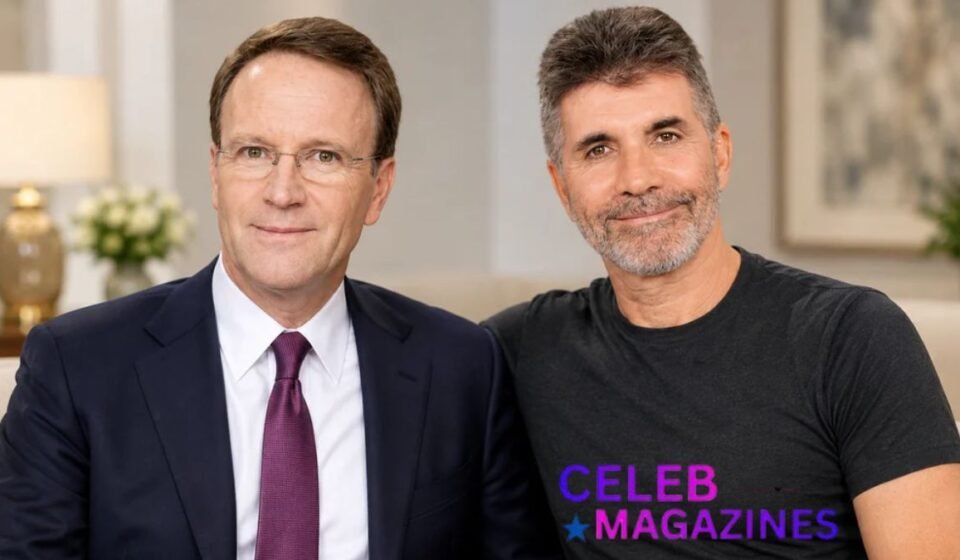

Ulf Mark Schneider and Simon Cowell rarely appear in the same sentence. One built a career reshaping global healthcare and food companies. The other turned blunt television critiques into an entertainment empire. Yet both rose through sharp instincts, willingness to take risks, and an ability to reinvent themselves when the landscape shifted.
This article looks at who they are, how they built influence, the setbacks they faced, and what their careers reveal about leadership that lasts.
Ulf Mark Schneider and Simon Cowell are two successful leaders from completely different worlds. Schneider is the former CEO of Nestlé and Fresenius who transformed major healthcare and food businesses. Cowell is the entertainment mogul behind The X Factor, Got Talent, and Syco who built a global talent empire. They share bold decision-making and reinvention skills but have no known professional connection.
Who Is Ulf Mark Schneider?

Ulf Mark Schneider was born on September 9, 1965, in Neuwied, Germany. He studied economics at the University of St. Gallen, earned a doctorate there, and completed an MBA at Harvard Business School. He holds both German and American citizenship.
Schneider started at the Haniel Group in 1989 and later served as finance director at Gehe UK. In 2001 he joined Fresenius Medical Care as CFO. By 2003 he became CEO of the broader Fresenius group. Under his leadership the company expanded rapidly through acquisitions in dialysis, hospitals, and pharmaceuticals. Revenue, employee numbers, and profits grew substantially during his tenure.
In 2016 Nestlé named him CEO, effective January 2017. He was the first outsider to lead the company in nearly a century. Schneider shifted focus toward higher-growth areas such as coffee, pet food, baby nutrition, and consumer health. He oversaw dozens of acquisitions and divestitures, including a major Starbucks coffee licensing deal and the sale of certain confectionery and ice-cream businesses.
His time at Nestlé ended in August 2024. The board replaced him with internal executive Laurent Freixe amid concerns over slowing sales growth and product innovation pace. Schneider has since taken board roles at Roche and Siemens.

Who Is Simon Cowell?
Simon Phillip Cowell was born on October 7, 1959, in London. He entered the music industry through the mailroom at EMI, where his father worked. Early attempts at running labels met mixed results, including financial struggles.
Cowell gained wider recognition as a judge on Pop Idol in 2001. His direct, often harsh feedback became a trademark. He co-created The X Factor and the Got Talent franchise. These formats expanded globally and launched careers for artists including Leona Lewis, One Direction, Little Mix, and Susan Boyle through his company Syco Entertainment.
He judged American Idol for years and later joined America’s Got Talent and Britain’s Got Talent. Estimates of his net worth commonly place it around $600 million, drawn from television fees, format ownership, music royalties, and production deals. Exact figures vary by source and year.
In recent years Cowell launched the Netflix series Simon Cowell: The Next Act, which followed the formation of a new boy band named December 10. The project reflected his continued interest in discovering and developing talent.
Different Worlds, Shared Traits
Ulf Mark Schneider and Simon Cowell operate in separate industries. Schneider works with balance sheets, supply chains, and long-term portfolio strategy. Cowell deals in public performance, audience reaction, and the rapid cycle of hits and misses.
Both demonstrate a preference for decisive action. Schneider pursued large acquisitions at Fresenius and later reshaped Nestlé’s product mix. Cowell repeatedly launched or refined talent formats that competitors tried to copy.
Both have faced public scrutiny. Schneider’s departure from Nestlé followed questions about growth rates and cultural fit within a traditional company. Cowell has drawn criticism for his on-screen style yet maintained audience interest across decades.
Neither stayed still. Schneider moved from German industrial groups into healthcare and then global consumer goods. Cowell shifted from record executive to television personality and back toward hands-on band development.
Also read: Glenn Close and Joaquin Duato: Careers Explored
Leadership Approaches
Schneider’s style emphasizes structure and data. At Fresenius he drove operational expansion. At Nestlé he prioritized categories with stronger margins and consumer trends around health and premium products. He also set environmental targets, including packaging recyclability efforts.
Cowell’s approach centers on instinct and presentation. He judges talent in real time and builds formats that turn ordinary auditions into shared cultural moments. His companies create vertical paths from television exposure to recorded music and live performance.
One works largely behind boardroom doors. The other thrives under studio lights. Both have shown the ability to cut underperforming parts of their businesses and double down on what works.
Challenges and Adjustments
Schneider’s Nestlé years included strong periods during the pandemic, when home consumption of coffee and pet food rose. Later challenges involved inflation-driven price increases, slower volume growth, and some operational missteps. The board ultimately sought a different leadership profile.
Cowell has dealt with shifting music industry economics, the rise of streaming, and the difficulty of repeating massive commercial successes such as One Direction. Health issues, including a serious e-bike accident in 2020 and later back surgery, forced temporary pauses. He has continued producing and judging while adjusting his public pace.
Neither career followed a straight upward line. Both required recovery and recalibration.
What Readers Can Take Away

Studying Ulf Mark Schneider and Simon Cowell side by side highlights a few practical points.
Bold moves matter, but timing and follow-through determine results. Schneider’s acquisitions expanded reach; some later needed pruning. Cowell’s formats scaled worldwide because the underlying entertainment value held up across cultures.
Reinvention is not optional. Markets change. Consumer habits shift. Audience tastes move. Leaders who treat past success as permanent often lose ground.
Public perception and internal results can diverge. Cowell’s blunt image is part of his brand. Schneider’s more reserved corporate style suited certain environments better than others. Matching personal approach to organizational culture remains a real factor.
Success metrics differ by field. Corporate leaders face quarterly numbers and share prices. Entertainment figures face ratings, streams, and cultural relevance. Both ultimately answer to whether their work creates lasting value.
FAQs
Did Ulf Mark Schneider and Simon Cowell ever work together?
No public records or reports indicate any professional collaboration or shared business ventures between them.
What companies has Ulf Mark Schneider led?
He served as CEO of Fresenius from 2003 to 2016 and as CEO of Nestlé from 2017 to 2024. He currently holds board positions at Roche and Siemens.
How did Simon Cowell build his fortune?
Primary sources include television judging and producing fees, ownership and licensing of talent-show formats, and music-related revenue through Syco. Estimates of total net worth commonly center near $600 million, though figures vary by source.
Why did Mark Schneider leave Nestlé?
Reports cited concerns over slowing sales growth, innovation pace, and questions about cultural fit after nearly eight years. The board appointed an internal successor.
What is Simon Cowell focused on recently?
He continues judging talent shows and has developed new projects, including the Netflix series that formed the boy band December 10.
Ulf Mark Schneider and Simon Cowell illustrate two distinct routes to influence. One navigated complex corporate systems and portfolio transformation. The other shaped popular culture through television and music. Their careers differ in setting and style, yet both show the value of clear decisions, adaptation under pressure, and the willingness to start new chapters when earlier ones close. Readers interested in leadership can find useful patterns in how each handled growth, setbacks, and the need to stay relevant.