



Evan Spiegel and Alex Gorsky stand among the most watched business leaders of their generation, yet they reached the top by completely different routes. Spiegel co-founded Snapchat and still runs the company he started in college. Gorsky climbed the ladder inside one of the world’s largest healthcare companies before retiring as its chairman and CEO. Their stories show how product vision and operational discipline can both create lasting impact.
Readers will see how each man made key decisions, where their professional networks overlap, and what their approaches teach about building and leading large organizations today.
Early Years and Formative Paths
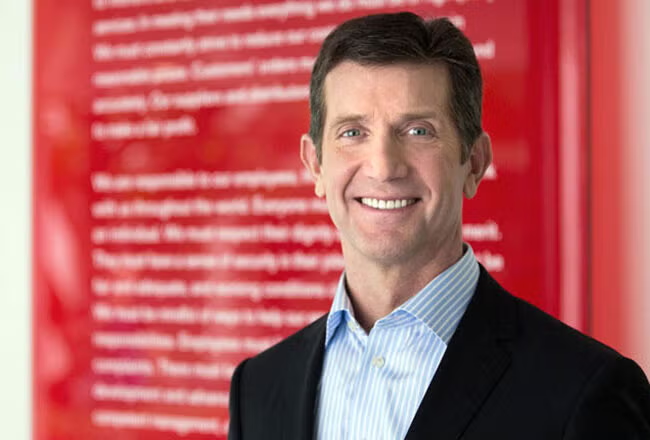
Evan Spiegel grew up in Pacific Palisades, Los Angeles, the son of two lawyers. He attended Stanford University and studied product design. While still a student he worked with Bobby Murphy on the idea that became Snapchat. The app launched in 2011 with a simple but powerful feature: photos and videos that disappear after viewing. Spiegel left Stanford to run the company full time and later finished his degree.
Alex Gorsky took a more traditional route. Born in Kansas City, Kansas, in 1960, he graduated from the U.S. Military Academy at West Point and served as an Army captain. After his service he earned an MBA from the Wharton School. In 1988 he joined Johnson & Johnson as a sales representative in the pharmaceutical division. Over the next two decades he moved through marketing, general management, and international roles, including a short stint at Novartis before returning to J&J.
These early experiences shaped their leadership styles. Spiegel learned to protect a product’s unique identity against bigger competitors. Gorsky learned how to manage large, regulated businesses across many countries and product lines.
Building Snap: Spiegel’s Product-First Approach
Spiegel and Murphy kept tight control of Snap even after the company went public in 2017. Special voting shares gave the founders the ability to set long-term direction. Spiegel has repeatedly chosen product decisions that favor user experience over short-term growth. The camera remains the center of the app. Augmented-reality lenses and Spectacles hardware show his willingness to invest years ahead of clear returns.
Snap has faced tough periods. Advertising revenue can swing with the economy, and competition from larger platforms never stops. Spiegel has responded by focusing on younger users, creative tools, and efficiency. He takes a $1 base salary and has donated large amounts of Snap stock to charitable causes, including the Snap Foundation that supports creative careers for young people in Los Angeles.
Net-worth estimates for Spiegel vary with Snap’s share price. Recent public figures place his fortune in the low billions, almost entirely tied to his Snap holdings. Exact numbers change with the market and should be treated as estimates.
Leading Johnson & Johnson: Gorsky’s Steady Climb
Alex Gorsky became CEO of Johnson & Johnson in 2012 and later added the chairman title. He was only the seventh person to hold both roles since the company went public in 1944. During his tenure the company advanced major products in pharmaceuticals, medical devices, and consumer health. It also navigated complex issues such as product liability cases and the development of a COVID-19 vaccine.
Gorsky placed strong emphasis on the company’s long-standing Credo, which puts patients, employees, communities, and shareholders in a clear order of priority. He pushed diversity and inclusion programs and spoke often about the need for business to serve broader society. In 2019 he helped lead the Business Roundtable’s updated Statement on the Purpose of a Corporation, which moved away from pure shareholder primacy.
He stepped down as CEO at the start of 2022 and later retired as executive chairman. Today he serves on the boards of Apple, IBM, and JPMorgan Chase. He is also a general partner at ICONIQ Capital and co-founder of the Alderline Group, focusing on technology and healthcare investments.
Shared Networks and Quiet Influence
Evan Spiegel and Alex Gorsky do not appear to have a close personal or business partnership. Their names surface together mainly through elite CEO groups. Both have participated in the Business Roundtable and the Business Council, organizations where chief executives discuss policy, leadership, and long-term economic issues.
These memberships matter. They give leaders a private forum to exchange views, test ideas, and sometimes shape public positions. Gorsky played a visible role in the 2019 corporate-purpose debate. Spiegel brings the perspective of a founder who still controls a public company and must balance growth with independence.
Their overlapping networks also include other major boards and advisory groups. Gorsky’s presence on Apple’s board and Spiegel’s earlier service on the board of KKR illustrate how influence moves across industries.
Leadership Styles Side by Side
Spiegel operates as a product visionary who protects the company’s creative culture. He has been willing to turn down large acquisition offers early in Snap’s life and to keep voting control concentrated. Critics sometimes call the structure undemocratic; supporters say it allows consistent long-term decisions.
Gorsky built influence through steady performance inside a complex organization. He managed through regulation, litigation, and global supply chains. His public comments often stress values, mental health for veterans, and the responsibility of large companies.
Both men have faced public scrutiny. Spiegel dealt with early controversies around Snapchat’s culture and privacy. Gorsky led J&J during periods of legal and public pressure over certain products. Neither career has been free of challenge, yet both maintained their positions through periods of difficulty.
Lessons for Business Leaders
Several practical points emerge from studying Evan Spiegel and Alex Gorsky together.
- Control and accountability can take different forms. Spiegel uses dual-class shares. Gorsky operated inside a traditional board structure with strong institutional ownership.
- Long-term product or purpose commitments often require short-term trade-offs. Spiegel invested heavily in AR before it became mainstream. Gorsky defended the J&J Credo even when it constrained certain decisions.
- Elite networks amplify influence but do not replace results. Membership in the Business Roundtable or similar groups opens doors; sustained performance keeps the seat.
- Different industries demand different skills. Consumer social apps reward rapid iteration and cultural relevance. Healthcare rewards regulatory expertise, scientific credibility, and operational scale.
These observations remain useful whether a reader runs a startup, sits on a board, or simply wants to understand how large organizations actually work.
Also read: Muhammad Ali and Safra Catz: Icons of Impact
Public Presence and Philanthropy
Spiegel lives in Los Angeles with his wife, model Miranda Kerr, and their children. He has supported education, the arts, and recovery efforts after local disasters. The Snap Foundation focuses on creative pathways for underrepresented youth.
Gorsky has long advocated for veterans’ mental health through the Travis Manion Foundation. He continues board and advisory work that keeps him connected to healthcare innovation and leadership development.
Neither man seeks constant media attention. Their public statements tend to stay focused on company strategy or specific causes rather than personal branding.
Looking Ahead
Spiegel continues to steer Snap through a competitive social-media landscape and the rise of artificial intelligence tools. Hardware bets such as Spectacles remain long-term projects whose success is still uncertain.
Gorsky’s post-CEO chapter centers on board service and investing. His experience in regulated industries and large-scale operations makes him a valuable voice on corporate governance and healthcare technology.
The careers of Evan Spiegel and Alex Gorsky demonstrate that lasting influence can come from either founding a company or mastering an existing one. What they share is a willingness to make clear choices, accept public responsibility, and stay engaged with the wider business community.
FAQs
Who is Evan Spiegel?
Evan Spiegel is the co-founder and CEO of Snap Inc., the company behind Snapchat.
Who is Alex Gorsky?
Alex Gorsky is the former CEO and chairman of Johnson & Johnson and currently serves on the boards of Apple, IBM, and JPMorgan Chase.
Do Evan Spiegel and Alex Gorsky work together?
No public evidence shows a direct business partnership; they mainly overlap through CEO organizations such as the Business Roundtable.
What is the main difference in their careers?
Spiegel built and still controls a consumer technology company he founded; Gorsky rose through the ranks of a large, established healthcare corporation.
Why are Evan Spiegel and Alex Gorsky often mentioned in leadership discussions?
Both have shaped major public companies and participated in high-level forums that influence corporate governance and policy.



[…] Also read: Evan Spiegel and Alex Gorsky: Two Paths to Influence […]
[…] Also read: evan-spiegel-and-alex-gorsky […]