



Muhammad Ali and Safra Catz stand as towering figures in completely different arenas, yet both built legacies defined by bold decisions, public scrutiny, and the ability to redefine what success looks like. One floated like a butterfly in the boxing ring and spoke truth to power far beyond it. The other navigated boardrooms and complex acquisitions to help transform a software giant. Their stories offer clear lessons in grit, strategy, and staying true to core principles even when the path grows difficult.
This article examines their backgrounds, key achievements, leadership styles, and the broader impact each left. Readers will gain a balanced look at how personal conviction and professional excellence can create influence that endures.
Muhammad Ali and Safra Catz are two iconic figures from completely different worlds — Ali, the legendary boxer and activist known as “The Greatest,” and Catz, the longtime Oracle CEO who helped turn the company into a cloud and AI powerhouse. Both rose from challenging backgrounds, led with bold conviction, and left lasting impact through resilience and high-level achievement.
Early Lives and Formative Influences
Muhammad Ali entered the world as Cassius Marcellus Clay Jr. on January 17, 1942, in Louisville, Kentucky. Growing up in the segregated South, he faced daily reminders of racial barriers. A stolen bicycle led him to a local boxing gym, where he discovered both talent and purpose. He won Olympic gold in the light heavyweight division at the 1960 Rome Games, then turned professional. In 1964 he defeated Sonny Liston to claim the heavyweight title and soon after changed his name, embracing the Nation of Islam and later Sunni Islam.
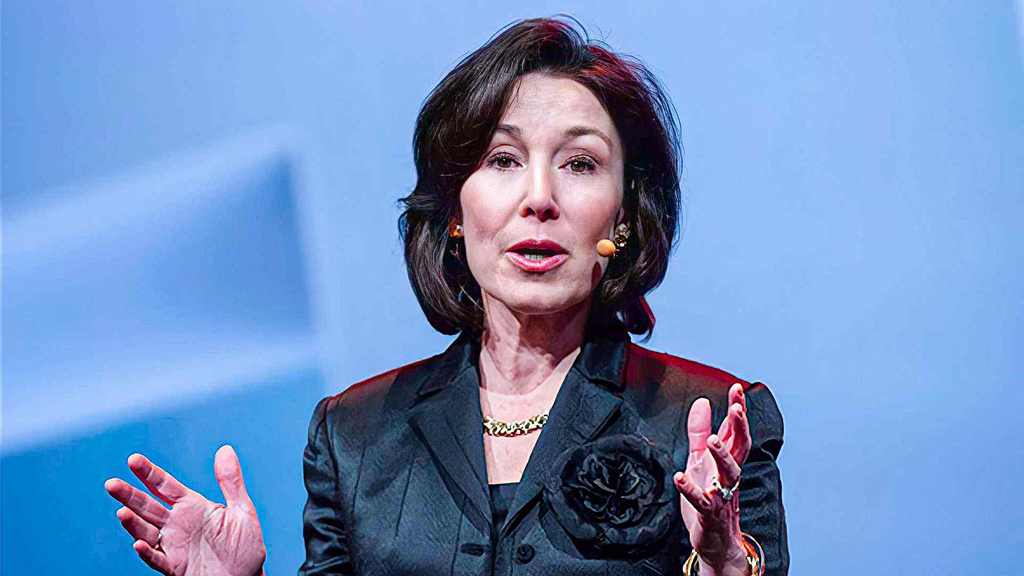
Safra Ada Catz was born in December 1961 in Holon, Israel, to Jewish parents. Her family moved to Brookline, Massachusetts, when she was six. She attended Brookline High School, earned a bachelor’s degree from the Wharton School of the University of Pennsylvania in 1983, and completed a J.D. from the University of Pennsylvania Law School in 1986. She spent years in investment banking at Donaldson, Lufkin & Jenrette, rising to managing director before joining Oracle in 1999.
Both faced environments that tested identity and opportunity. Ali confronted systemic racism and later religious discrimination after his name change and draft refusal. Catz navigated male-dominated finance and technology spaces as an immigrant woman. Each turned those early pressures into fuel for higher performance.
Career High Points and Defining Moments
Ali’s professional record stood at 56 wins and 5 losses, with 37 knockouts. He reclaimed the heavyweight title multiple times, including famous victories over Joe Frazier and George Foreman in the “Rumble in the Jungle.” His 1967 refusal to be drafted into the Vietnam War cost him his titles and nearly three years of his prime. The U.S. Supreme Court later overturned his conviction. After retirement in 1981 he focused on philanthropy and lived with Parkinson’s disease for decades until his death on June 3, 2016.
Estimates of his net worth at the time of death centered around $50 million. Much of that value came from fight purses earlier in his career and a 2006 deal in which he sold an 80 percent interest in his name, image, and likeness rights while retaining a minority stake. Figures vary by source, and exact private holdings remain difficult to pin down with precision.
Catz joined Oracle as an executive in 1999 and joined the board in 2001. She played a central role in the company’s aggressive acquisition strategy, including the hard-fought $10.3 billion purchase of PeopleSoft. In 2014 she became joint CEO alongside Mark Hurd after Larry Ellison stepped down from the role. After Hurd’s death in 2019 she served as sole CEO until September 2025, when she transitioned to executive vice chair. Under her leadership Oracle expanded its cloud business significantly and positioned itself for the AI era. Forbes has listed her net worth in the range of roughly $2.9 billion in recent valuations; estimates fluctuate with stock performance and other factors.
Her path involved steady accumulation of responsibility rather than sudden celebrity. She earned recognition on lists of powerful women in business while maintaining a relatively low public profile compared with many tech leaders.
Leadership Styles and Public Personas
Ali projected charisma and confidence that filled arenas and television screens. He predicted rounds, recited poetry, and used humor as both weapon and shield. Off the canvas he spoke openly about race, religion, and war. That visibility brought admiration from millions and sharp criticism from others. He accepted the costs of his positions and continued humanitarian work long after his fighting days ended.
Catz operates with a quieter intensity. Colleagues and observers have described her as focused on results, deal-making, and operational discipline. She helped steer Oracle through major transitions while the company competed in cloud infrastructure and enterprise software. Her style emphasizes preparation, financial rigor, and long-term positioning over flashy public statements. She has also served on other boards, including a past role with The Walt Disney Company.
The contrast is instructive. Ali’s leadership thrived on personal magnetism and moral clarity in the public square. Catz’s leadership thrives on institutional navigation and sustained execution inside complex organizations. Both approaches delivered measurable results in their respective domains.
Also read: Gary Heminger and Kathy Warden: Leadership Lessons Compared
Shared Themes of Resilience and Influence
Muhammad Ali and Safra Catz both demonstrate how outsiders can reshape established systems. Ali forced sports and broader American culture to confront questions of identity and conscience. Catz helped an established technology company reinvent itself for cloud computing and artificial intelligence workloads.
Resilience appears in different forms. Ali absorbed physical punishment in the ring and social punishment outside it, then adapted to life with Parkinson’s while remaining a global symbol. Catz advanced through competitive banking and technology environments where few women held similar roles at the highest levels. Both maintained focus when circumstances grew adverse.
Their influence extends beyond personal statistics. Ali inspired athletes, activists, and ordinary people to speak up. Catz’s tenure at Oracle contributed to the company’s growth trajectory and its place in modern enterprise technology. Neither story is free of complexity or criticism, yet both remain studied for the scale of what they achieved.
Lasting Lessons from Two Distinct Paths

Readers can draw practical takeaways. First, clarity of purpose matters. Ali knew the values that guided his decisions inside and outside the ring. Catz pursued operational and strategic goals with consistency over more than two decades at one company. Second, adaptability proves essential. Ali reinvented himself multiple times as circumstances changed. Catz guided Oracle through successive technological shifts. Third, impact often requires accepting trade-offs. Ali paid a professional price for his principles. Catz operated in high-stakes environments that demand difficult choices.
Neither figure fits a simple heroic narrative. Ali’s public statements at times created friction with various communities. Corporate leadership under Catz involved the usual pressures of shareholder expectations, competition, and large-scale change. Honest examination of both records strengthens rather than weakens the lessons.
FAQs
What connects Muhammad Ali and Safra Catz?
They represent excellence and resilience in sports activism and technology leadership, though they worked in unrelated fields and never collaborated.
How did Muhammad Ali earn his wealth?
Primarily through boxing purses during his career and a major 2006 deal involving rights to his name and image, with estimates of his net worth at death near $50 million.
What was Safra Catz’s role at Oracle?
She rose from executive roles to co-CEO in 2014, served as sole CEO after 2019, and became executive vice chair in 2025 after helping expand the company’s cloud business.
Did Muhammad Ali face major career setbacks?
Yes. His refusal to be drafted led to stripped titles and a multi-year ban before the Supreme Court overturned his conviction.
Is Safra Catz considered self-made?
Yes. She built her career through education, banking experience, and long-term performance at Oracle, reaching billionaire status according to multiple wealth rankings.
Muhammad Ali and Safra Catz continue to offer relevant examples for anyone interested in high achievement under pressure. Their records show that lasting influence comes from combining talent with conviction and the willingness to adapt. Studying both figures side by side highlights how different paths can produce comparable depth of impact in the worlds they chose to enter.



[…] Also read: Muhammad Ali and Safra Catz: Icons of Impact […]